Visual Optimization: The Art of Fraudmaxxing
Fraudmaxxing is the strategic use of styling, lighting, and optical illusions to enhance your appearance without permanent changes. These tactics are not dishonest—they're how modeling, photography, and professional appearance work. Master them.
Core Principle
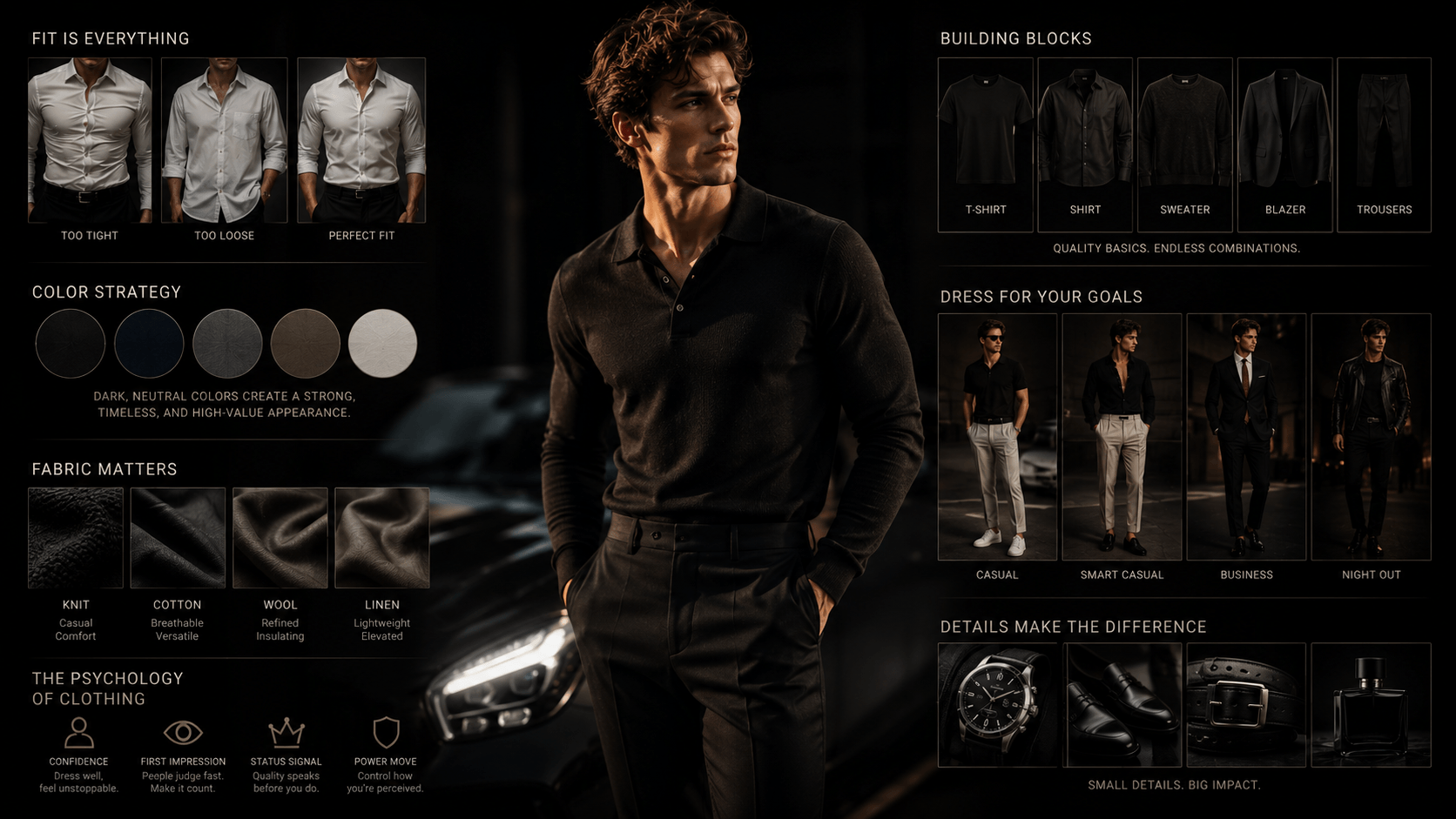
Everything in appearance is about contrast and proportion. A 5'11" man wearing fitted clothes and proper shoes looks taller than a 6'1" man in baggy clothes. Same height, different perception.
Footwear and Height Enhancement
Height is one of the most powerful appearance signals. Adding 2-3 inches is realistic and unnoticeable.
Elevator Shoes
Modern elevator shoes look normal. They're not obvious like platform shoes from the '70s.
Best brands:
- Chamaripa: $150-250. Italian leather, natural look.
- TOMS Air: $150. Casual and comfortable.
- Cole Haan: $200-300. Dress shoes with built-in height.
How they work: Extra sole depth (1.5-2 inches under the heel, tapered under the ball of the foot). The height is distributed across the sole, so it's not a jarring step-up.
When to wear: Dates, professional events, photos, social situations. Daily wear is overkill and uncomfortable.
Psychology: Research shows people perceive taller individuals as more confident and competent. +2 inches legitimately changes how people treat you.
Insoles and Arch Support
Even without elevator shoes, proper insoles help:
- Posture improvement: Arch support corrects your stance, making you stand taller naturally.
- Confidence: No foot pain = better gait and presence.
- Cost: $20-50 per pair.
Best options:
- Superfeet Green (mid-level support, all-purpose)
- Powerstep Pinnacle (high arch support, athletic)
Hair Styling and Face Framing
Hair frames your face and can add perceived width, length, or definition.
Haircut Principles
For round faces:
- Longer on top, shorter on sides (adds vertical length illusion).
- Textured, messy cuts (width distribution, less round-looking).
- Avoid: Rounded tops, all one length.
For long/narrow faces:
- Volume on the sides (adds width).
- Shorter on top (reduces vertical emphasis).
- Textured sides and back.
For square/angular faces:
- Longer on top (softens sharp angles).
- Undercut or fade on sides (contrast).
- Textured, wavy hair (rounds angles).
Hair Styling Products
Pomade (wax-based): Matte finish, holds all day, controlled look. Best for longer hair.
Gel (water-based): Shiny, strong hold. Good for slicked-back styles.
Clay/Powder (matte): Natural-looking hold, good for texture.
Best brands (budget): Got2b Glued Spiking Glue ($3), American Crew ($10).
Application:
- Warm the product between your palms.
- Work into damp hair (not soaking wet).
- Style as desired, let it dry.
- Light second application if needed.
Eye Enhancement
Eyes are the most expressive feature. Small enhancements go a long way.
Eye Contact and Pupil Dilation
Psychology: Dilated pupils appear more attractive and engaged. This is why dim lighting is used in romantic settings.
How to optimize:
- Ensure good lighting when meeting someone (dilates pupils naturally).
- Make direct eye contact (appears confident, attractive).
- If you wear glasses, ensure they're clean and unscratched (reflection matters).
Eyebrow Grooming
Sparse or light eyebrows?
- Tint them: Maybelline Tattoo Studio ($6), applied with a small brush, 2-3 times per week.
- Threading: $15-30 professional service, shapes and darkens simultaneously.
Dark, defined eyebrows add 3-5 years of perceived youth and intensity.
Colored Contact Lenses
Blue eyes are overrated, but slightly lighter or more saturated eye color can enhance appearance.
Options:
- FreshKon or Bausch+Lomb colored contacts ($50-80 per box).
- Wear on special occasions (they're not as comfortable as clear contacts).
Realistic impact: Subtle. Not a game-changer, but an option.
Facial Hair Optimization
Beard Grooming
A well-maintained beard adds 5+ years of perceived maturity and aggression (in a good way).
If you can grow it:
- Let it grow for 8-12 weeks.
- Trim the neckline once per week (clean up stray hairs below the jaw).
- Trim the cheekline once per week (clean line connecting ear to chin).
- Use beard oil (3-5 drops daily) for shine and softness.
Best oils: Beard Balm ($10-15), Cedarwood scent.
If it's patchy: Keep it clean-shaven. A sparse beard is worse than no beard.
Mustache
A well-groomed mustache is bold. It adds presence and maturity instantly.
Protocol:
- Grow for 6-8 weeks.
- Trim the edges weekly to define shape.
- Use beard wax to curl the tips (optional but impactful).
Clothing Contrast and Proportion
The Rule of Thirds
Divide your body into thirds (head, torso, legs). Use color contrast to balance proportions.
If you're short: Wear dark pants with a lighter top (emphasizes legs less, draws attention upward).
If you're tall: Wear lighter pants with a darker top (balances proportions).
If you're stocky: Wear vertical stripes, longer-line jackets (creates length illusion).
If you're lean: Wear horizontal stripes, layered clothing (creates width illusion).
Color Psychology
- Dark colors: Slimming, formal, serious.
- Light colors: Airy, casual, youthful.
- Bright colors: Attention-grabbing (use as accents, not base).
- Neutral colors: Safe, timeless, elegant.
Pro tip: Stick to 2-3 colors per outfit. More looks chaotic.
Makeup and Contouring (If Interested)
Most men don't wear makeup, but light coverage is becoming more accepted.
Light Foundation
- Purpose: Evens skin tone, covers minor blemishes.
- Application: Thin layer, blended well (shouldn't be obvious).
- Cost: $20-40.
- Best option: Tinted BB cream (lighter than foundation, more natural-looking).
Contouring (For Photos or Events)
Contouring uses darker shades to add definition.
Key areas:
- Jawline: Darker shade along the jawline, blended outward (adds definition).
- Cheekbones: Darker shade under the cheekbone, blended upward (adds depth).
- Forehead: Darker shade on the perimeter (makes forehead appear smaller).
Keep it subtle. Obvious contouring looks bad in person (only works in photos with professional lighting).
Lighting and Photography
This is why models look different in different photos.
Flattering Lighting
Golden hour (30 minutes after sunrise, 30 minutes before sunset): Soft, warm light. Most flattering.
Overhead lighting: Harsh, creates shadows under eyes (unflattering).
Side lighting: Adds dimension and definition (flattering).
Front lighting: Soft, even (neutral, not flattering).
Camera Angles
- Looking down at camera (tilt it 20° down): Reduces double chin appearance, makes jaw more defined.
- Looking level: Most natural.
- Looking up at camera: Adds definition to jawline (power pose).
Distance from Camera
- Close (2-3 feet): Distorts features, can look unflattering.
- Medium (4-5 feet): Most flattering, natural proportions.
- Far (8+ feet): Too small, loses detail.
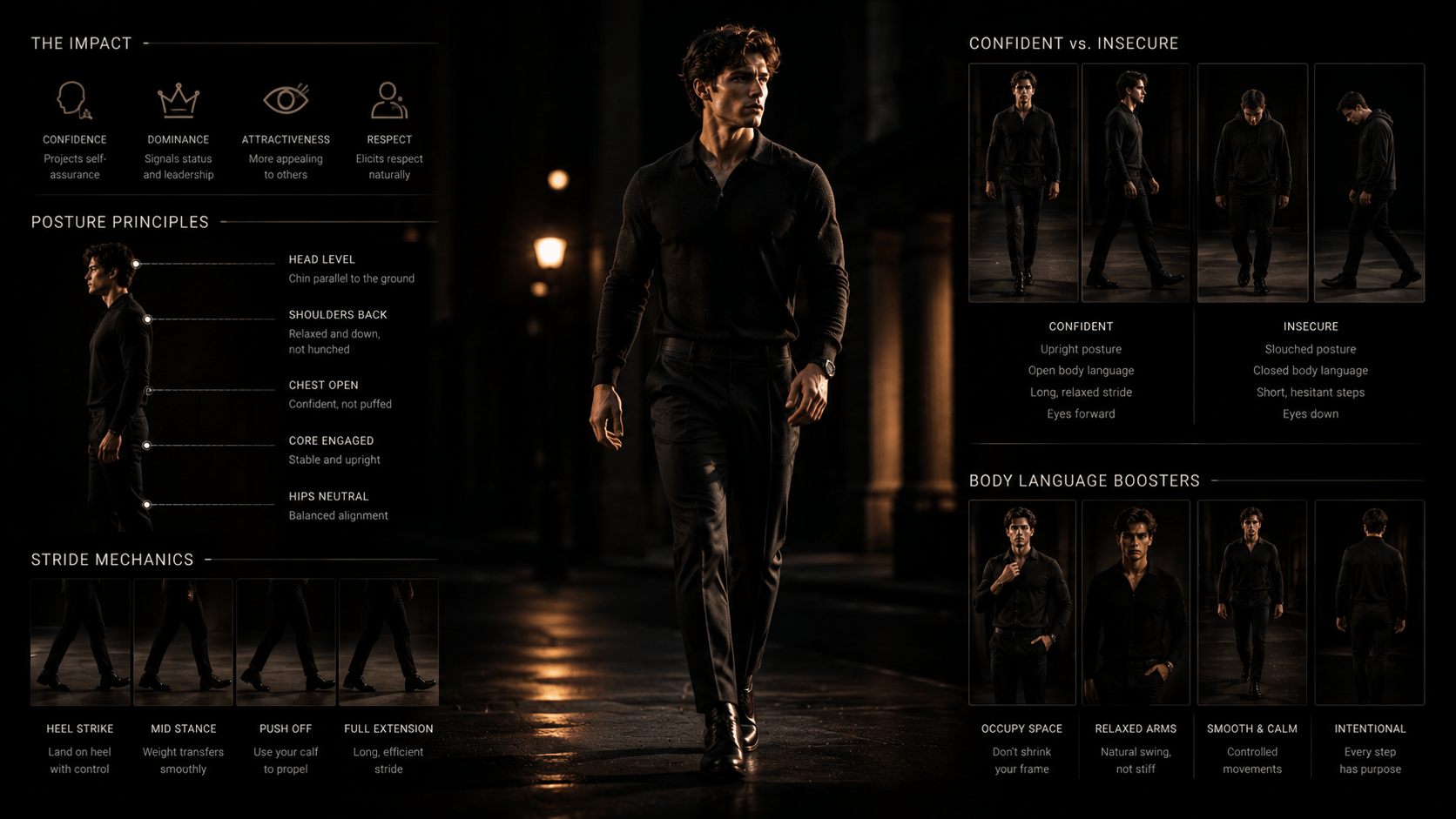
Posture and Presence
Standing posture:
- Shoulders back, chest open (appears taller, more confident).
- Chin parallel to ground (not tilted up or down).
- Weight evenly distributed on both feet.
Sitting posture:
- Back straight, shoulders back.
- Don't slouch (instantly looks 10 lbs heavier and less confident).
Walking:
- Direct eye contact with people.
- Shoulders relaxed, arms at sides (not swinging wildly).
- Pace: Moderate (not rushing, not dragging).
Small changes in posture create massive perception shifts.
The Fraudmaxxing Stack (Practical)
Low effort:
- Haircut ($25, every 3-4 weeks).
- Groom facial hair daily.
- Proper posture.
Medium effort:
- Elevator shoes for events ($200 one-time).
- Styled hair (product, 2 minutes daily).
- Fitted clothing.
Higher effort:
- Light makeup/contouring for photos.
- Colored contacts for special occasions.
- Professional photos with good lighting.
Final Word
Fraudmaxxing is not dishonesty—it's self-respect. Models, actors, and public figures use these tactics constantly. Elevator shoes, styled hair, and fitted clothes are not "fake"—they're professional presentation. Master them.