Status Maxxing: How to Raise Your Perceived Social Value
Status maxxing is the deliberate optimization of how others infer your rank, influence, and social value. Unlike looksmaxxing, which focuses on physical traits, status maxxing operates through signals: context, behavior, association, and visibility.
For men especially, perceived status strongly affects attractiveness, authority, and social leverage — humans assess status quickly because, evolutionarily, it correlated with access to resources, protection, and leadership. This guide covers both halves of the equation: the durable foundations that make status real, and the signals that communicate it.
One honest caveat up front: the most robust status is built on real competence, character, and relationships. Signaling amplifies what's there; it can't durably fake what isn't. Optimize the substance and the signals together — pure image without substance tends to collapse on contact.
Core Principles of Status
- Status is inferred, not declared.
- Perception is shaped by signals, but is most stable when backed by reality.
- Consistency across contexts increases credibility.
- Association and visibility amplify perceived rank.
- Subtlety outperforms overt flexing.
Part 1 — The Durable Foundations (build these first)
Signals decay fast when there's nothing behind them. These are the assets that make status sticky:
Competence and a real skill. Being genuinely good at something valued — a craft, a profession, a domain — is the most durable status source there is. It generates authority that doesn't need announcing.
A network of respected relationships. Status is partly conferred by who vouches for you. Being known and well-regarded by capable people is worth more than any single possession.
Character under pressure. Reliability, composure, and follow-through build a reputation that compounds over years. This is the slowest-built and least fakeable status asset.
Physical and health capital. Fitness and grooming aren't just aesthetic — muscularity in particular functions as a biological status cue: stronger, more muscular men are consistently rated as higher status, more dominant, and more capable as leaders.12 Strength training directly improves perceived authority.
Build these, and everything in Part 2 has something true to amplify.
Part 2 — The Signals (communicate what you've built)
Clothing and grooming
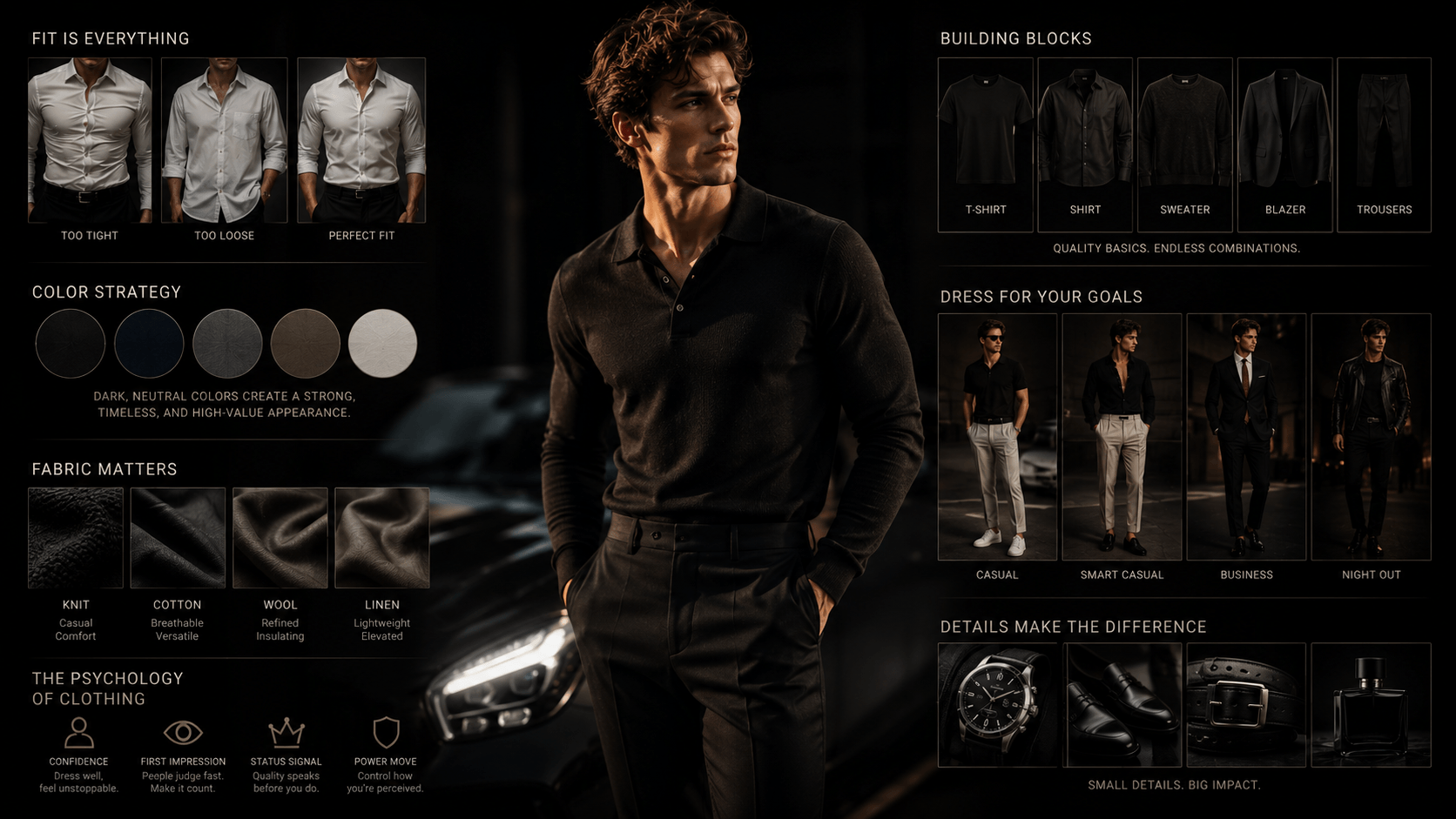
Clothing is one of the fastest status signals. Observers rapidly infer higher social rank, competence, and confidence from men in tailored or higher-quality attire.3 Rules of thumb: fit beats brand, structure beats decoration, clean silhouettes beat trends.
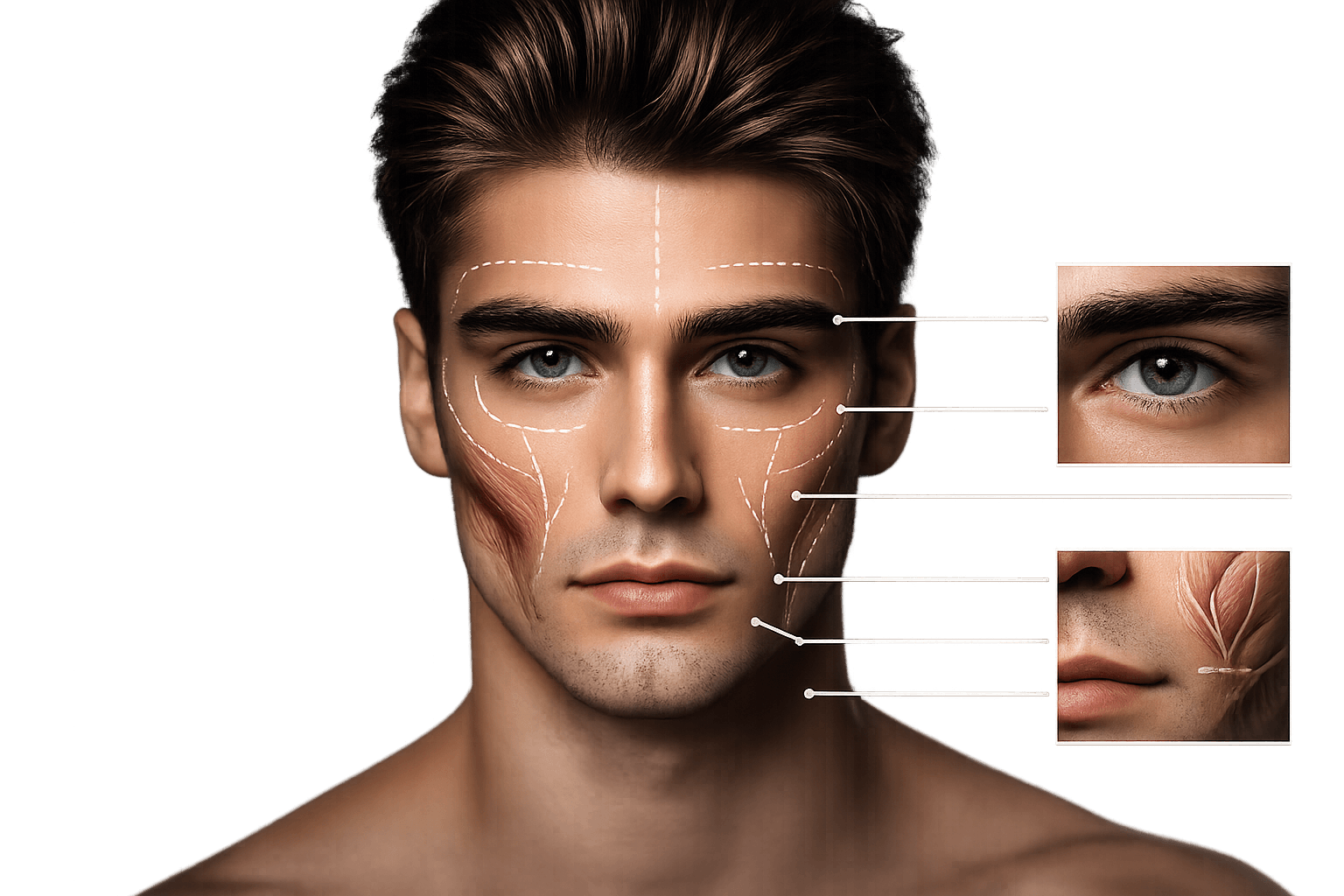
Grooming compounds this. Well-maintained facial hair, for instance, raises perceptions of dominance and maturity — but the effect depends entirely on upkeep; neglect erases it.4 Accessories work as secondary cues (a quality watch, minimal jewelry, good footwear) — one strong signal beats many weak ones.
Online presence
A curated, coherent online presence compounds faster than offline alone:
- Lifestyle over selfies. Research on social media and travel shows curated experiences emphasizing exclusivity function as modern status symbols; lifestyle-centered images tend to outperform face-centered posts for status inference.5
- Professional visibility. Content signaling competence and leadership (talks, projects, clean high-end workspaces) reinforces authority.
- Social proof. Higher engagement and endorsement raise perceived likability and desirability — but excessive self-promotion reduces trust, so let association and consistency do the work.
- Narrative consistency. Your presence should tell one coherent story rather than random flexing.
Behavior and presence
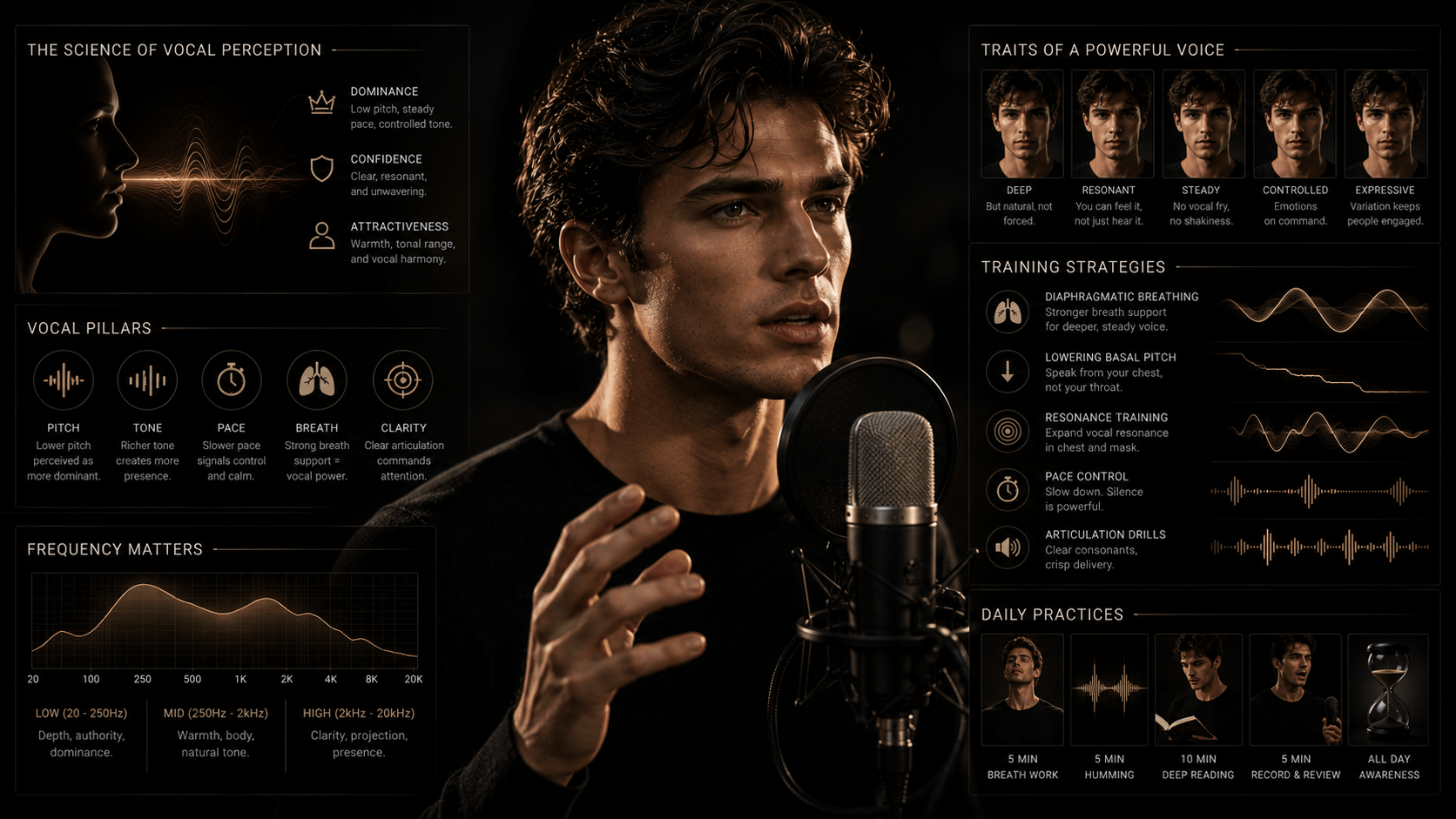
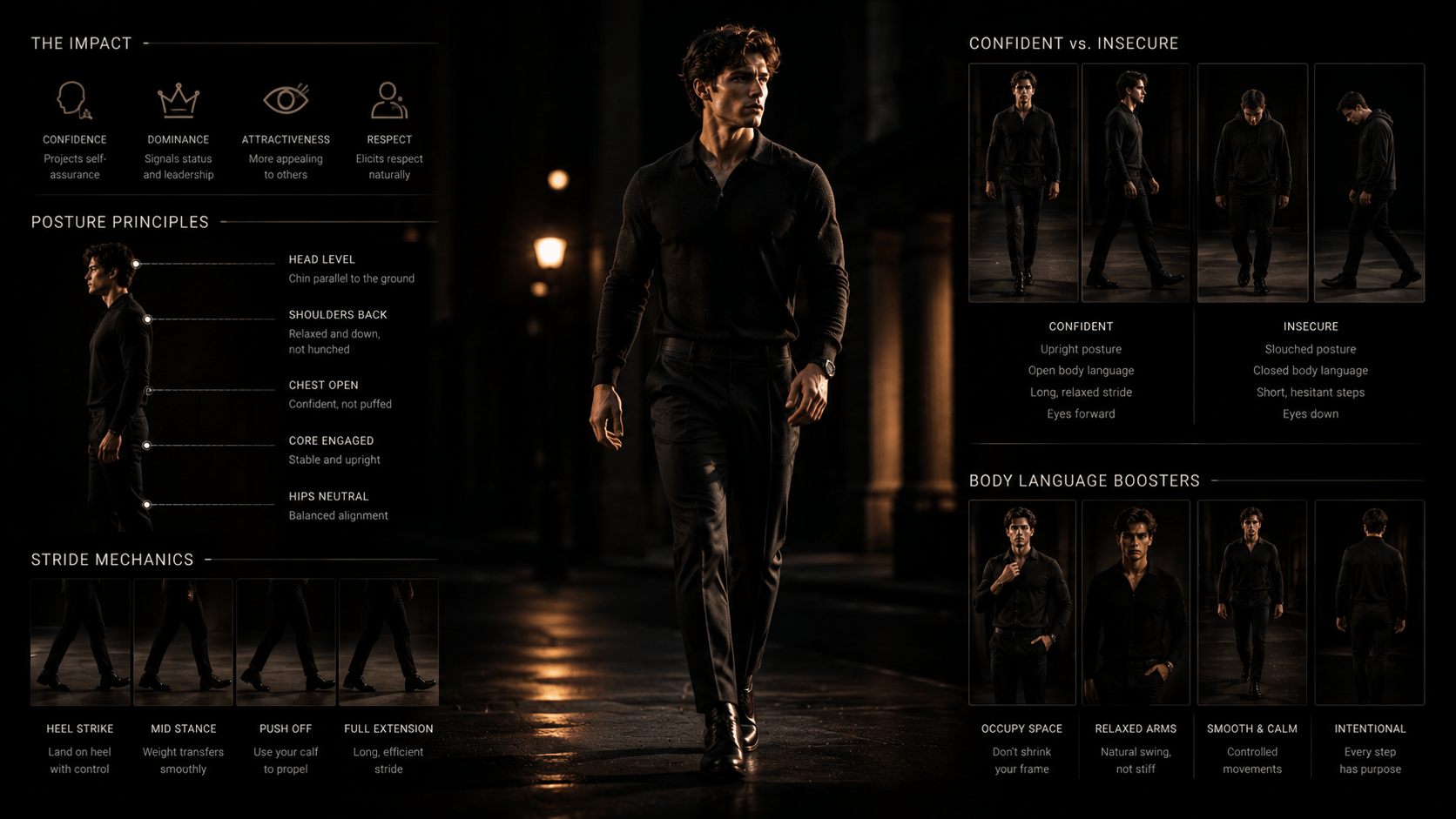
Nonverbal cues strongly shape rank perception: upright posture, unhurried movement, controlled gestures, and a calm vocal tone all read as confidence and control. High-status behavior tends to be economical — speaking with intent, not over-explaining, staying composed under observation.
Association
Status is partly contagious: being seen among respected people and in selective environments raises perceived rank. It rises faster through association than isolation — so invest in real communities and relationships rather than trying to project status alone.
A Realistic Framework
- Build substance first: a valued skill, real relationships, health/fitness, and reliability.
- Signal cleanly: fit-first style, sharp grooming, a coherent presence.
- Compound through association: show up where respected people are, and be worth vouching for.
- Stay subtle: remove signals that suggest low status rather than shouting high status.
Common Mistakes
- All signal, no substance. Rented lifestyles and borrowed flexes collapse under scrutiny.
- Over-flexing. Overt self-promotion lowers trust and reads as low status.5
- Inconsistency. Contradictory signals across contexts destroy credibility.
- Neglecting grooming/fitness. The most reliable, controllable cues — wasted if ignored.14
- Isolation. Trying to build status without a network is the slow, hard road.
Frequently Asked Questions
Can you fake high status? Short-term, somewhat — but it's fragile. Durable status needs real competence, relationships, and character behind the signals; otherwise it collapses on closer contact.
What's the single highest-ROI status move? For most people: get fit and dress well. Both are controllable, fast, and backed by evidence linking muscularity and quality attire to higher perceived status.13
Does social media status transfer to real life? Partly. Online signals shape first impressions, but they're strongest when they match a coherent offline reality. Mismatch erodes trust.
Is status just about money? No. Competence, network, health, composure, and grooming all move perceived status independent of wealth — and are more controllable.
Final Word
Status maxxing isn't pretending to be powerful — it's building something real and then removing the signals that suggest you aren't. Invest in substance (skill, relationships, health, character), signal it cleanly (fit, grooming, a coherent presence), and let association compound it. Substance without signaling goes unseen; signaling without substance doesn't last. Do both.
References
Footnotes
-
Perceptions of muscular men as higher status, more dominant, and more capable as leaders. Proceedings of the Royal Society B. https://royalsocietypublishing.org/doi/10.1098/rspb.2017.1819 ↩ ↩2 ↩3
-
Muscularity and formidability cues in social/leadership perception. PLOS ONE. https://journals.plos.org/plosone/article?id=10.1371/journal.pone.0202451 ↩
-
Men in formal/higher-quality attire rated as more competent, confident, and higher status. Personality and Social Psychology Bulletin. https://journals.sagepub.com/doi/10.1177/0146167215599742 ↩ ↩2
-
Experimental evidence that bearded men are rated higher in dominance/status than clean-shaven (contingent on grooming). Royal Society Open Science. https://royalsocietypublishing.org/doi/10.1098/rsos.160098 ↩ ↩2
-
Curated travel/lifestyle posts as modern status symbols, and the trust cost of excessive self-promotion. Annals of Tourism Research / Social Psychological and Personality Science. https://www.sciencedirect.com/science/article/pii/S0261517721000893 ↩ ↩2