Neck Training: How to Build a Defined, Youthful Neck
The neck is one of the most under-trained parts of the body and one of the biggest tells for age and conditioning. A defined neck sharpens the jawline, balances the head-to-shoulder transition, and reads as youthful and athletic. Here's how to build one — safely — and why body fat and posture matter as much as training.
Safety note: The neck is a load-sensitive area. Start with bodyweight and band work, avoid heavy loaded neck exercises without coaching, and stop immediately if you feel sharp pain, dizziness, tingling, or numbness. If you have a history of neck injury, disc issues, or high blood pressure, talk to a clinician before training the neck.
The Three Levers of Neck Definition
Neck appearance is governed by three things, and training is only one of them:
- Body fat — the biggest single factor. Muscle you can't see does nothing for your look.
- Posture — forward head posture blurs the jaw-to-neck line no matter how strong the neck is.
- Muscle — the sternocleidomastoid, platysma, and traps that give the neck shape.
Fix all three together; training alone won't show if fat covers it or posture hides it.
Body Fat and Neck Definition
Submental (under-chin) and neck fat are what obscure jaw-to-neck separation. As a rough guide for most men:
- ~20%+ body fat: neck is soft, jaw blends into neck.
- ~15–20%: hint of jaw definition emerging.
- ~12–15%: clear jaw-to-neck distinction, neck muscle visible.
- Under ~12%: highly defined, platysma "strings" visible when tensed.
Practical takeaway: if your neck lacks definition, getting leaner will usually do more than any neck exercise. Aim to combine leanness with the training below.
Posture Comes First
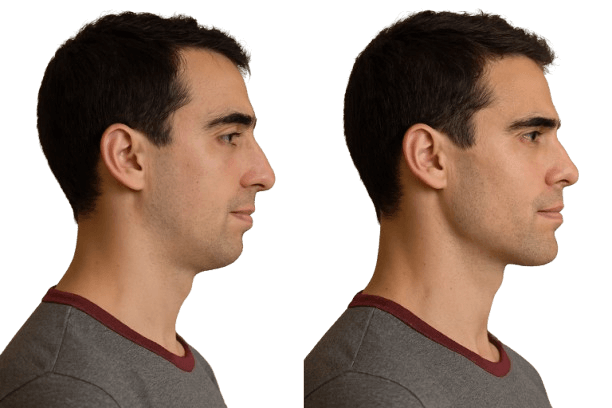
Forward head posture is the fastest way to make a neck look thick and undefined — the chin appears to melt into the neck. Correcting head position (ears stacked over shoulders) instantly restores a cleaner jaw-to-neck line. Before grinding neck reps, read the posture guide and fix head position; it's a prerequisite, not an optional extra.
Neck Training Routine (Safe & Simple)
Start conservative. Neck muscles respond quickly, so you don't need heavy loading to progress.
Isometric neck holds (beginner, safest)
Place a palm against your forehead and gently press your head into it without moving (front, back, and each side). Hold ~5–10 seconds, 3–5 rounds per direction. This builds strength with minimal joint stress.
Resistance-band neck work (intermediate)
Loop a light band and work gentle flexion (front), extension (back), and lateral flexion (sides) through a controlled range. 2–3 sets of 12–15, slow tempo. Progress resistance gradually.
Platysma activation (visual detail)
Draw the corners of your mouth back and down and tense the neck; you'll see the platysma engage. Hold ~2 seconds, release, for 2–3 sets of 15. This trains the superficial "shredded neck" look — visible mainly at low body fat.
Traps
Don't forget the upper traps — shrugs (3×15) build the neck-to-shoulder transition that frames the whole area.
Frequency: neck recovers fast; 3–5 short sessions a week (5–10 minutes) is plenty. Consistency beats intensity here.
Timeline and Expectations
| Week | What to expect |
|---|---|
| 1–2 | No visible change; mild muscle soreness is normal |
| 2–4 | Slight firmness when flexed |
| 4–8 | Visible definition if body fat is low enough |
| 8–12 | Clearer jaw-to-neck transition; platysma visible when tensed |
The variable that overrides everything: body fat. At 20%+ you won't see definition no matter how well you train — lean up in parallel.
Don't Forget Neck Skin
Neck skin is thinner and more sun-exposed than facial skin, so it often ages faster — yet most people stop their skincare at the jaw. Extend the basics down:
- Cleanser and moisturizer, including the neck.
- Daily SPF 30+ on the neck (the most impactful step for preventing crepey, aged-looking skin).
- An optional retinoid a few nights a week if you're addressing texture and early aging.
Common Mistakes
- Training the neck while ignoring body fat. Definition won't show under a layer of fat.
- Loading too heavy too soon. The neck isn't the place to ego-lift; build gradually.
- Ignoring posture. Forward head posture cancels the payoff.
- Skipping traps. The neck-to-shoulder line needs trap development to look complete.
- Neglecting neck skin. Strong muscle under aged, sun-damaged skin still looks old.
Frequently Asked Questions
Is neck training safe? For healthy people, gentle isometric and band work is generally well tolerated. Avoid heavy loaded neck movements without coaching, and stop for any sharp pain, dizziness, or numbness. Get cleared by a clinician if you have neck injury history or high blood pressure.
How long until my neck looks more defined? Muscle firmness shows in 4–8 weeks, but visible definition depends on getting body fat low enough. For many people, fat loss reveals the neck faster than training builds it.
Will neck exercises get rid of a double chin? A "double chin" is mostly submental fat plus posture. Training helps the underlying muscle, but fat loss and neutral head posture do most of the visible work.
Do neck-slimming gadgets work? Evidence for gadget devices is weak. Simple band/isometric work plus leanness and posture achieves more, for free.
Final Word
A defined neck is an underrated, achievable win — but it's a three-part project: get lean, fix posture, then train the neck (and protect the skin). Keep the training gentle and consistent rather than heavy, and let body fat do the reveal. Five to ten minutes a few times a week, alongside leanness and good posture, produces a neck that frames the jaw and reads years younger.