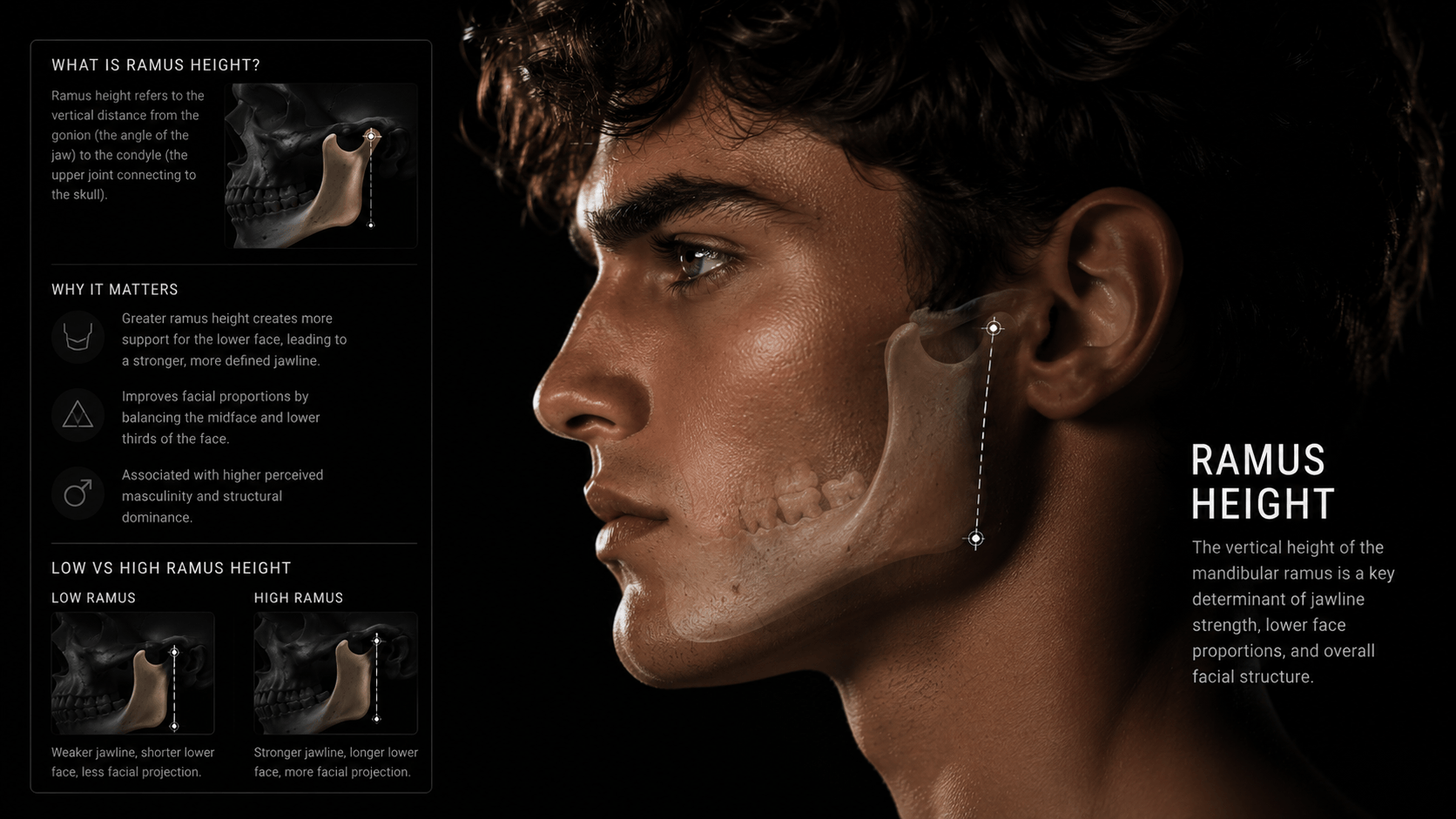
Mewing, Chewing & Forward Facial Growth — What the Evidence Actually Says
Tongue posture, jaw training, and "forward facial growth" are some of the most hyped topics in looksmaxxing — and some of the most exaggerated. This guide gives you the honest version: what the science supports, what it doesn't, and how to get the real, achievable jawline gains without chasing myths.
The Honest Evidence Summary (read this first)
Let's be direct, because most content online isn't:
- There are no peer-reviewed clinical trials showing that mewing remodels adult facial bones or "sharpens" an adult jawline. The American Association of Orthodontists explicitly states that the evidence behind mewing's jawline-sculpting claims is very thin, because facial structure is governed by a complex interplay of genetics, bone growth, and muscle development that tongue position alone can't override.1
- Tongue posture matters most during active growth (childhood/adolescence), when the palatal sutures are still open and facial growth is ongoing. That's the legitimate basis of orthotropics in pediatric dentistry — not adult face transformation.12
- Most dramatic "mewing before/afters" are explained by other variables: fat loss, better posture, jaw clenching for the photo, camera angle, and lighting — not bone change.2
- Structured, clinician-guided orofacial myofunctional therapy (OMT) is a real, different thing with published evidence for functional outcomes like reducing obstructive sleep apnea severity. It is not the same as DIY "mewing" for aesthetics.3
None of this means tongue posture is worthless — good oral posture and nasal breathing are healthy habits. It means you should expect function and small refinements, not skeletal transformation. Setting that expectation is what protects you from wasted effort and disappointment.
What is Mewing?
Mewing is simply proper resting tongue posture: the whole tongue resting flat against the hard palate (roof of the mouth), lips closed, teeth lightly together, breathing through the nose. Many people habitually rest the tongue on the floor of the mouth instead.
Proper oral posture is associated with nasal breathing and healthy airway function. The overreach happens when people claim it will move adult bone.
How to do it
- Make a "click" sound (like the k in "key") — your tongue just found the hard palate.
- Rest the whole tongue there gently (not just the tip), without strain.
- Lips closed, teeth lightly touching, jaw relaxed.
- Breathe through your nose.
If it feels forced or your tongue aches, you're pushing too hard. It should be effortless.
Realistic Expectations by Age
If you're still growing (roughly under ~18)
Tongue posture, nasal breathing, and adequate chewing are part of normal healthy craniofacial development. This is where the orthotropic principles have the most legitimacy — but growth guidance in this window belongs with an orthodontist, not a TikTok routine.12
If you're an adult
Your facial bones are essentially set. You can improve:
- Airway and breathing habits (nasal breathing, better tongue rest position).
- Posture (which changes how your existing jaw appears — see below).
- Masseter muscle tone (via chewing — a small but real effect).
You cannot grow your maxilla forward or restructure your jaw without surgery. Claims otherwise aren't supported by adult clinical evidence.13
| Timeline | Realistic outcome |
|---|---|
| 1–2 weeks | Adjusting to tongue position; possible mild fatigue |
| 2–4 weeks | Habit forms; posture may improve |
| 1–3 months | Subtle masseter tone from chewing; better breathing habits |
| 3–6 months | Visible jaw definition improvement — mostly from fat loss + posture, not bone |
Forward Facial Growth (and Why "Forward Growth Hacks" Are Overstated)
"Forward facial growth" describes maxilla and mandible that developed forward and horizontally, producing strong chin projection, facial width, and a defined jawline. Backward/vertical growth (recessed jaw, "long face") is the opposite and is associated with mouth breathing and narrow airways.
The key fact people skip: this is largely determined by genetics and by growth that finished in childhood/adolescence. After skeletal maturity, you can't naturally push the maxilla forward.12
What you can actually change as an adult
1. Posture (biggest lever). Correcting forward head posture immediately improves how far forward the jaw appears and how defined the jaw-to-neck transition looks. This is a real visual gain — a change in presentation, not bone.
2. Body fat. Jawline definition is overwhelmingly a function of body-fat percentage. A defined jaw hidden under submental fat won't show regardless of tongue posture; get leaner and the existing structure emerges.
3. Airway function. Nasal breathing and better tongue rest support airway health and sleep quality. Meaningful for health and daytime presence — not a bone-growth mechanism.
4. Surgery (only if clinically warranted). Orthognathic (jaw) surgery genuinely moves the maxilla/mandible forward. It's expensive, involves months of recovery plus orthodontics, and is appropriate for significant functional problems (e.g., sleep apnea, malocclusion) — not a casual aesthetic choice.
Chewing / Jaw Training (the small but real gain)
Chewing tough gum works the masseter, the main jaw-closing muscle. Trained muscle can add a little width and firmness to the jaw region — genuinely, but modestly.
Sensible protocol:
- Chew a firm gum ~15–20 minutes total per day, split between both sides evenly.
- Consistency beats intensity.
- Stop if you feel jaw-joint (TMJ) pain. Overtraining the jaw can cause or worsen TMJ discomfort. Mild muscle fatigue is fine; sharp joint pain is a stop signal.
Realistic result: subtle masseter development over 2–3 months, visible mostly at lower body fat. It's an accessory, not the main event.
The Actual Priority Order for a Better Jawline
- Get lean (body fat is ~80% of visible jaw definition).
- Fix posture (immediate perceived improvement — see the posture guide).
- Adopt good oral posture + nasal breathing (health + small refinement).
- Chew for modest masseter tone.
Do the first two and you'll get almost all of the realistically achievable gain.
Common Mistakes
- Expecting bone change as an adult. The most common and most disappointing error. Expect refinement, not transformation.1
- Straining the tongue. Good posture is relaxed, not forced.
- Chewing into TMJ pain. The joint is delicate — back off at sharp pain.
- Skipping fat loss. Strong jaw muscles are invisible under high body fat.
- Believing before/after photos. Angle, lighting, clenching, and weight change explain most of them.2
Frequently Asked Questions
Does mewing actually work? For adults, there's no clinical evidence it remodels facial bone or sharpens the jawline; orthodontic bodies caution against those claims.1 It can support healthier oral posture and nasal breathing. Visible jaw improvements in adults come mainly from fat loss and posture.
Can teenagers change their face with mewing? Growth guidance has more legitimacy during active development, but it should be supervised by an orthodontist rather than self-directed — and even then, outcomes are individual.12
Is mewing dangerous? Done gently, no. Forcing tongue or bite position, or chewing to the point of joint pain, can cause strain or TMJ issues. Ease off if anything hurts.1
What's the difference between mewing and myofunctional therapy? Mewing is a DIY posture idea marketed for aesthetics. Orofacial myofunctional therapy is a structured, clinician-led program with published evidence for functional outcomes such as reducing sleep apnea severity.3
Can I get a defined jaw without surgery? Yes — by getting lean and fixing posture. That won't change your bone structure, but it reveals and optimizes the structure you have.
Final Word
Good oral posture and nasal breathing are healthy habits worth keeping, and chewing adds a little jaw tone. But the honest, evidence-based truth is that adult jawline gains come from losing fat and fixing posture, not from reshaping bone with your tongue. Chase the levers that actually move — and treat any "grow your jaw forward as an adult" claim with skepticism.
Related reading: Posture: how it changes your appearance · Gonial angle · Body fat & facial aesthetics · Facial structure & harmony
References
Footnotes
-
American Association of Orthodontists. Does Mewing Actually Reshape Your Jaw? (Position on the lack of scientific support for mewing's jawline claims in adults.) https://aaoinfo.org/whats-trending/is-mewing-bad-for-you/ ↩ ↩2 ↩3 ↩4 ↩5 ↩6 ↩7 ↩8 ↩9
-
Discussion of orthotropics and the age-dependence of tongue-posture effects, and why adult "before/after" changes are attributable to weight, posture, and photographic factors. https://www.perfectcorp.com/business/blog/general/mewing-results ↩ ↩2 ↩3 ↩4 ↩5 ↩6
-
Evidence for clinician-guided orofacial myofunctional therapy (distinct from mewing) improving functional outcomes such as obstructive sleep apnea severity. https://handandstructurenyc.com/blog/mewing-vs-myofunctional-therapy-what-the-evidence-really-says ↩ ↩2 ↩3